Door panel depth should support the scale, style, and visual weight of the home’s architecture. Deeper panels can create stronger shadow lines and a more substantial appearance, while shallower panels usually feel cleaner, lighter, and more restrained.
For Phoenix homes, the best panel depth depends on the full composition of the entrance. A custom wood door should relate to nearby stone, stucco, beams, windows, trim, and other permanent features rather than using depth as decoration on its own.
What Does Door Panel Depth Change Visually?
Panel depth changes the way light and shadow move across a door.
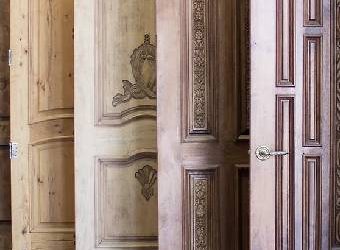
A deeper recessed panel creates stronger contrast between the raised frame and the center section. This can make the door feel more dimensional and substantial, especially when viewed from a distance.
Shallower panels create a softer transition. They can still add structure, but the effect is quieter and often better suited to contemporary or transitional architecture.
The choice should reflect how much visual activity already exists around the entrance.
When Do Deeper Panels Work Best?
Deeper panels often suit homes with strong architectural detail.
They can work well with:
- Spanish-style homes
- Southwestern architecture
- Traditional residences
- Old World-inspired exteriors
- Heavy masonry
- Exposed beams
- Substantial columns
In these settings, a flatter door may appear visually weak against the surrounding materials.
Solid wood custom doors with deeper panels can create enough dimension to hold their own beside stone or textured stucco without requiring excessive carving.
The effect can also help a large entrance feel more grounded.
When Are Shallower Panels a Better Choice?
Shallower panel depth often works better when the architecture depends on clean lines and restrained geometry.
Modern and contemporary homes may already feature:
- Large windows
- Flat rooflines
- Broad stucco walls
- Simple metal details
- Minimal trim
- Strong horizontal or vertical lines
In these environments, heavy panel depth can introduce more visual complexity than the architecture needs.
A handcrafted wood door with shallow panels can still provide structure while allowing the grain, proportions, and hardware to remain the main focus.
How Does Sunlight Affect the Look of Panel Depth?
Sunlight can make panel depth appear more dramatic.
When light reaches the door at an angle, deeper recesses create stronger shadows. This can make a panel design more pronounced during certain times of day.
In Phoenix, where direct sunlight can be intense, this effect may be especially noticeable on exposed entrances.
A deeply recessed doorway may produce much softer shadows, while a west-facing entrance may show strong late-day contrast.
Homeowners should consider:
- Door orientation
- Entry depth
- Overhangs
- Nearby walls
- Time of day
- Reflected light
The same custom-made wooden door can look very different depending on where it is installed.
Should Larger Doors Use Deeper Panels?
Not always, but larger doors often need stronger visual structure.
A very tall or wide door with shallow, small panels may look under-scaled. Larger panels with greater depth can help the design match the overall dimensions.
However, the relationship matters more than the depth alone.
The designer should consider:
- Panel size
- Rail width
- Stile width
- Door height
- Door width
- Hardware scale
- Glass placement
The goal is to keep the panel depth proportional to the full door.
Simply making every detail deeper does not automatically improve the design.
How Should Panel Depth Relate to Rails and Stiles?
Rails and stiles form the framework around the panels, so their proportions should work together.
A deep panel surrounded by very narrow rails and stiles can look visually unbalanced. A shallow panel inside extremely heavy framing can have the opposite problem.
The strongest custom wood doors usually create a clear relationship between:
- Panel recess
- Frame width
- Panel size
- Door thickness
- Overall scale
This allows the eye to read the entire door as one composition.
Can Panel Depth Help Define Architectural Style?
Yes.
Panel depth is one of the details that can shift the character of a door.
Deeper recessed panels often feel more traditional, substantial, or formal. Shallower panels can feel cleaner and more modern.
However, panel depth should not be used alone to define style.
Grain direction, hardware, glass, door proportions, and surrounding architecture all contribute.
A custom wood front door with shallow panels and strong vertical grain may feel contemporary, while the same general door with deeper panels and traditional hardware may feel more formal.
How Should Panel Depth Work With Glass?
Glass introduces another visual layer.
A deeply recessed wood panel beside a nearly flush glass section can create strong contrast. This may work well when the design intentionally separates solid and transparent areas.
In other cases, the transition should be more subtle.
The depth of the panel should relate to:
- Glass framing
- Sidelights
- Transoms
- Door thickness
- Hardware placement
The glass should feel integrated rather than inserted into a door with unrelated proportions.
Can Panel Depth Compete With Wood Grain?
Yes.
Wood grain already creates visual movement, especially on species with strong figure or natural variation.
If the grain is highly expressive, very deep panels may add too much complexity.
A quieter panel depth can allow the wood itself to remain the focal point.
By contrast, a relatively calm wood species may benefit from stronger panel relief because the depth adds dimension that the grain does not provide.
Handcrafted wood doors often look best when one feature leads and the others support it.
How Should Panel Depth Relate to Stone and Stucco?
Exterior materials can help determine how much depth the door needs.
Stone and masonry typically have strong texture. A door with some dimensional relief can feel more proportionate beside them.
Smooth stucco or minimalist wall surfaces may call for a quieter door.
The door does not need to copy the texture of the exterior.
Instead, it should create enough visual weight to feel connected without competing.
For example, a deeply textured stone façade may benefit from a custom wood door with broad, simple panels rather than a highly detailed pattern.
Should Interior and Exterior Panel Depth Match?
Not necessarily.
Exterior doors are usually viewed from farther away, so stronger depth may help the design remain visible.
Interior doors are seen at closer range, where shallower panel changes can still be noticeable.
The architecture on each side also differs.
An exterior face may need to relate to stone, stucco, and sunlight. The interior side may need to coordinate with flooring, cabinetry, trim, and furniture.
A well-planned custom door can respond to both environments without making every detail identical.
What Should Homeowners Review Before Finalizing Panel Depth?
Before choosing panel depth, homeowners should consider:
- Architectural style
- Door height and width
- Entry orientation
- Sun exposure
- Wood grain
- Rail and stile proportions
- Glass
- Hardware
- Nearby stone or stucco
- Viewing distance
It is also useful to review the entire entrance from the street and walkway.
A panel that looks deep in a close-up sample may appear much more subtle from farther away.
Companies such as Anasazi Architectural Door create custom wood front door designs around the proportions, materials, and architecture of individual Phoenix homes.
The right panel depth is the one that supports the home’s visual language. When scale, shadow, grain, and surrounding materials are considered together, the door can feel substantial and intentional without becoming overly detailed.