Recap:
- Hardwood flooring in Helena must account for Montana’s dry winters and seasonal humidity swings that affect wood stability.
- Professional installers test moisture content and acclimate flooring before laying planks to prevent gaps and cupping.
- Local providers offer installation, refinishing, and custom design services alongside other flooring categories.
Homeowners searching for durable, visually warm flooring that holds up to Montana’s climate swings typically find solid or engineered hardwood the most reliable long-term option when it is installed with proper acclimation and moisture testing. Getting this right from the start is the difference between a floor that lasts decades and one that gaps or cups within a year.
Hardwood Flooring in Helena, MT requires more attention to seasonal humidity than flooring installed in milder, more consistent climates. Helena’s cold, dry winters and warmer summer months create wood movement that installers must plan for before a single board goes down. A business that specializes in hardwood work, such as Big Sky Installations LLC, approaches each project with this climate variability in mind rather than treating installation as a one-size-fits-all process.
Why Climate Matters for Hardwood in Montana Homes
Wood is hygroscopic, meaning it absorbs and releases moisture based on the surrounding air. In a region like Helena, where indoor heating runs for months at a time, relative humidity indoors can drop well below the range wood flooring needs to stay stable.
- Ideal indoor conditions for hardwood are generally a relative humidity range of 30 to 50 percent and a temperature range of 60 to 80 degrees Fahrenheit, according to National Wood Flooring Association installation guidelines.
- The guidelines also specify that solid strip flooring should have no more than a 4 percent moisture content difference from the subfloor it rests on.
- Skipping acclimation or ignoring these thresholds is a common cause of boards that gap in winter or cup in summer.
This is why reputable installers test both the subfloor and the flooring material with a moisture meter before installation begins, rather than relying on visual inspection alone.
What the Installation Process Typically Involves
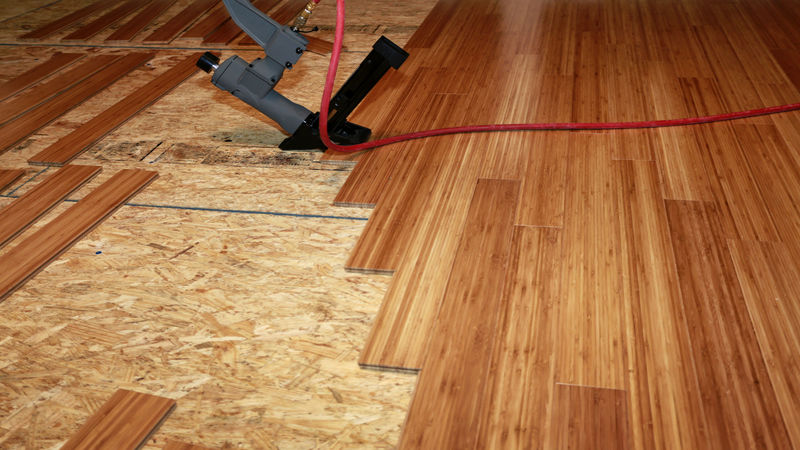
A professional hardwood job in Helena generally follows a sequence designed to reduce the risk of future movement or finish failure.
- Site and subfloor assessment. The installer checks the subfloor for flatness, moisture readings, and structural soundness.
- Acclimation period. Flooring material sits in the home’s conditioned environment so it can adjust to indoor humidity before installation.
- Layout and installation. Boards are laid according to the chosen pattern, whether that is traditional strip, wide plank, or a detail pattern like herringbone.
- Finish and final inspection. Sanding, staining, or pre-finished board installation is completed, followed by a walkthrough.
Each step matters on its own, but skipping any one of them increases the odds of callbacks for squeaks, gaps, or finish issues down the line.
Comparing Hardwood Against Other Common Flooring Choices
Homeowners weighing hardwood against alternatives often want a quick side-by-side before committing to a material.
| Flooring Type | Moisture Tolerance | Typical Lifespan | Refinishing Option |
| Solid Hardwood | Low to moderate | Multiple decades with care | Yes, can be sanded and refinished |
| Engineered Hardwood | Moderate | Long-term, varies by wear layer | Limited, depends on wear layer thickness |
| Laminate | Low | Shorter than hardwood | No |
| Luxury Vinyl Plank | High | Long-term for high-traffic areas | No |
This table reflects general industry characteristics rather than a specific product line, and actual performance depends on installation quality and home conditions.
Custom Design and Refinishing Considerations
Beyond new installation, many Helena homeowners are working with existing hardwood that needs refinishing or a design update. Pattern choices such as herringbone, wide plank, or mixed-width layouts change both the visual feel of a room and the labor involved in installation. Refinishing existing floors can also extend their service life significantly when the wear layer or solid wood thickness still allows for sanding.
Frequently Asked Questions
How long does hardwood flooring installation usually take? Timelines vary with square footage, subfloor condition, and whether acclimation delays are needed, but most residential installations are scheduled over several days once materials are on site.
Does Helena’s dry winter climate affect hardwood differently than other regions? Yes. Low indoor humidity during heating season can pull moisture from wood flooring faster than in milder climates, which is why acclimation and humidity control matter more locally.
Can existing hardwood floors be refinished instead of replaced? In many cases, yes, provided the wood has enough remaining thickness to sand without exposing nails or the subfloor beneath.
What flooring types are typically installed alongside hardwood in a home remodel? Many of the same crews that install hardwood also work with laminate, luxury vinyl, and carpet, which allows for consistent quality across mixed-material remodels.
Choosing hardwood flooring is as much about understanding Helena’s climate as it is about selecting a wood species or finish. Homeowners who prioritize proper acclimation, moisture testing, and a clear installation sequence tend to see fewer problems years down the road. For residents planning a hardwood installation, refinishing project, or custom design consultation, Big Sky Installations LLC offers services rooted in the local Helena, MT market and the practical realities of installing wood flooring in a four-season climate.