Bulging and herniated discs are frequently mentioned as causes of back pain, neck pain, sciatica, and numbness. Although the terms are sometimes used interchangeably, they describe different changes within the cushioning discs between the vertebrae.
Both conditions can occur without noticeable symptoms. When displaced disc tissue irritates a nearby nerve, however, pain may spread into an arm or leg and interfere with walking, sitting, sleeping, or working. Understanding the difference can help San Diego, CA, patients ask better questions about diagnosis and conservative treatment options, including spinal decompression therapy.
What Is a Bulging Disc?
Each spinal disc has a soft, gel-like center surrounded by a stronger outer layer. A bulging disc occurs when the disc extends beyond its usual boundary across a relatively broad portion of its circumference.
The outer layer generally remains intact, but the disc may flatten or widen because of aging, repeated loading, injury, or gradual wear. Bulges are commonly identified on imaging and do not automatically explain a person’s pain.
Symptoms are more likely when a bulging disc narrows the space around a nerve or contributes to spinal canal narrowing. Depending on its location, a symptomatic bulge may cause localized back or neck pain, tingling, numbness, or discomfort traveling into an extremity.
How Is a Herniated Disc Different?
A herniated disc involves a more focused displacement of disc material. Part of the softer center pushes through a weakened or torn area of the outer layer.
A herniation may remain contained or extend farther into the spinal canal. If the displaced material presses against or inflames a nerve root, symptoms may include sciatica, arm pain, muscle weakness, numbness, or changes in reflexes.
The size of a herniation does not always predict the severity of symptoms. A small herniation near a sensitive nerve may cause substantial discomfort, while a larger imaging finding may produce few problems. This is why treatment should be based on the examination and symptom pattern rather than the scan alone.
Can Both Conditions Cause Similar Symptoms?
Yes. Bulging and herniated discs can both contribute to nerve irritation, restricted movement, and pain. They can also produce no symptoms at all.
In the lower back, nerve involvement may cause pain that travels through the buttock and leg. In the neck, symptoms may spread into the shoulder, arm, or hand. Coughing, sneezing, bending, prolonged sitting, or certain neck movements may make the discomfort worse.
Because muscle strain, arthritis, spinal stenosis, joint irritation, and other conditions can produce similar symptoms, an evaluation is necessary before assuming a disc is responsible.
What Is Non-Surgical Spinal Decompression?
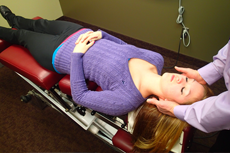
Non surgical spinal decompression uses a motorized table or device to apply controlled traction to the spine. The force is delivered gradually according to the area being treated and the person’s tolerance.
The goal is to temporarily reduce mechanical pressure and create a gentle stretching effect across spinal structures. Treatment does not remove disc material, and patients should be cautious of claims that it permanently restores every damaged disc.
Herfindahl Chiropractic provides information about spinal decompression therapy and how they use computerized decompression when it is considered appropriate for an individual’s condition.
Can Decompression Help a Bulging or Herniated Disc?
Chiropractic spinal decompression therapy may be considered for selected patients with disc-related back or neck symptoms. Some studies suggest that adding motorized decompression to a broader rehabilitation program may improve pain and function in certain patients.
The evidence is not conclusive, and decompression has not consistently been shown to be superior to conventional traction or other conservative approaches. Results can vary according to the diagnosis, symptom duration, treatment protocol, and whether exercise or other therapies are included.
For this reason, decompression is best viewed as one possible component of care. It should not be presented as a guaranteed way to eliminate a bulge, reverse a herniation, or prevent surgery.
What Else May Be Included in Conservative Care?
A comprehensive plan may combine activity modification, therapeutic exercise, mobility work, ergonomic changes, and gradual strengthening. Medication or other medical treatment may also be considered depending on the person’s symptoms and health history.
Remaining gently active is often preferable to prolonged bed rest. In San Diego, this may mean temporarily modifying activities such as surfing, cycling, running, lifting, or extended driving rather than stopping all movement.
The objective is to reduce nerve irritation while rebuilding the strength and movement capacity needed for daily life.
When Is Spinal Decompression Not Appropriate?
Spinal decompression is not suitable for every patient. Certain fractures, severe osteoporosis, spinal instability, infections, tumors, pregnancy, recent spinal surgery, or other health conditions may affect treatment eligibility.
Urgent medical attention is needed when back pain occurs with new bowel or bladder problems, numbness around the groin or saddle region, rapidly progressing weakness, loss of coordination, fever, or symptoms after major trauma.
Choosing Treatment Based on Symptoms and Findings
A bulging disc and a herniated disc differ anatomically, but either may be painless or may irritate a nearby nerve. The most useful diagnosis connects the imaging findings with the person’s symptoms, physical examination, and functional limitations.
For San Diego residents considering conservative care, non-surgical spinal decompression may be one option within a broader plan. A careful assessment can help determine whether the disc is likely contributing to the problem and whether decompression, exercise, another treatment, or medical referral is the most appropriate next step.