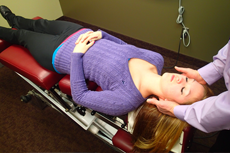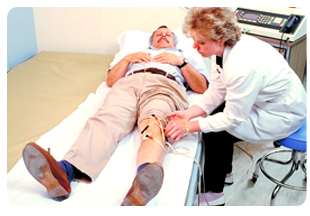
Shockwave treatment may be used for persistent outer hip tendon pain by delivering controlled acoustic waves to irritated soft tissues near the side of the hip. This noninvasive approach may help reduce pain sensitivity, stimulate local tissue activity, and support recovery when symptoms continue despite activity changes or other conservative care.
Outer hip pain is often associated with irritation of the gluteal tendons, which connect important hip muscles to the upper portion of the thigh bone. Because several conditions can cause discomfort in this area, patients should receive a proper evaluation before beginning chiropractic shockwave therapy.
What Causes Persistent Pain on the Outside of the Hip?
Pain on the outer side of the hip is frequently related to irritation of the gluteus medius or gluteus minimus tendons. These tendons help stabilize the pelvis during standing, walking, climbing stairs, and balancing on one leg.
When the tendons are repeatedly compressed or loaded beyond their current capacity, they may become painful and sensitive. The condition is sometimes described as gluteal tendinopathy or greater trochanteric pain syndrome.
Common contributing factors may include:
- A sudden increase in walking or running
- Repeated hill or stair climbing
- Reduced hip strength
- Changes in walking mechanics
- Prolonged standing on one leg
- Sleeping directly on the painful side
- Crossing the legs frequently
- Previous lower back, hip, or knee problems
People in San Diego, CA, may notice symptoms after increasing hiking, running, cycling, gym training, or other outdoor activities. Pain may also develop gradually in people whose work requires long periods of standing or walking.
What Does Outer Hip Tendon Pain Feel Like?
Outer hip tendon pain is commonly felt over the bony area on the side of the upper thigh. The discomfort may be sharp during certain movements or feel like a dull ache after activity.
Symptoms may increase when:
- Lying on the painful side
- Walking for longer distances
- Climbing stairs
- Rising from a low chair
- Standing on one leg
- Getting in or out of a vehicle
- Running or performing lateral movements
Some people experience pain that travels down the outer thigh. However, symptoms that extend below the knee, include numbness or tingling, or appear with lower back pain may involve another condition.
A chronic pain chiropractor or other qualified provider may examine the hip, lower back, muscles, and movement patterns to identify the likely source of the symptoms.
How Does Shockwave Treatment Work?
Shockwave treatment uses a handheld device to deliver acoustic pressure waves into a targeted area. These waves are mechanical rather than electrical, and treatment does not involve an incision.
The controlled stimulation may influence local circulation, cellular activity, tissue remodeling, and pain signaling. This may help the body respond to an area that has remained sensitive or slow to recover.
During chiropractic shockwave therapy, the provider applies gel to the skin and moves the applicator over the affected tendon region. The intensity, pulse rate, and treatment duration can be adjusted according to tissue sensitivity and patient comfort.
Shockwave therapy for pain is generally provided as a series of sessions. Improvement may occur gradually rather than immediately after the first treatment.
Why May Shockwave Therapy Be Considered for Tendon Pain?
Tendon problems can become persistent when the tissue remains exposed to repeated compression, overload, or insufficient recovery. Rest may temporarily reduce pain, but symptoms often return when normal activity resumes.
Shockwave chiropractic care may be considered when outer hip pain has not improved enough through reasonable activity changes, movement exercises, or other conservative approaches. The treatment may help stimulate a new tissue response without surgery or injections.
However, shockwave treatment should not be used in isolation while the same aggravating activities continue unchanged. A complete plan may also address hip strength, movement tolerance, sleep position, exercise volume, and walking mechanics.
Best Life Chiropractic provides information about its San Diego approach to Shockwave Treatment. They evaluate the painful area and surrounding movement patterns before determining whether the service may be appropriate.
What Does Chiropractic Shockwave Therapy Feel Like?
Patients often describe chiropractic shockwave therapy as a series of rapid tapping or pulsing sensations. The treatment may feel uncomfortable when applied over a highly sensitive tendon, but the intensity can usually be modified.
A provider may begin with a lower setting and gradually increase it as tolerated. Stronger treatment is not automatically more effective, and the patient should remain able to communicate throughout the session.
Patients should report sharp pain, unexpected numbness, or symptoms that spread into another area. This feedback allows the provider to adjust the applicator position or treatment settings.
Temporary tenderness may occur after a session. Significant swelling, severe pain, or worsening function should be reported and evaluated.
How Many Treatments May Be Needed?
The number of treatments varies based on symptom duration, tissue sensitivity, activity demands, health history, and response to care. There is no single schedule that produces the same outcome for every patient.
Progress may be measured by changes in:
- Walking distance
- Stair-climbing comfort
- Ability to sleep on the affected side
- Tenderness over the hip
- Standing tolerance
- Exercise participation
- Frequency of symptom flare-ups
If symptoms do not improve, the diagnosis and treatment plan should be reconsidered. Persistent pain may sometimes originate from the lower back, hip joint, nerves, or other nearby structures.
What Can Support Recovery Between Sessions?
Activity may need to be modified temporarily, but complete inactivity is not always necessary. Patients may benefit from reducing movements that repeatedly produce sharp pain while continuing tolerable daily movement.
Sleeping on the opposite side with a pillow between the knees may reduce compression on the painful hip. Avoiding prolonged standing with the weight shifted onto one leg may also help.
Exercise progression should be gradual. Increasing running distance, hiking elevation, or resistance training too quickly may overload a sensitive tendon.
Patients should discuss which activities are appropriate rather than relying on a standard exercise routine. The correct plan depends on current strength, pain behavior, and movement limitations.
When Does Outer Hip Pain Need Further Evaluation?
An evaluation is appropriate when pain lasts several weeks, repeatedly returns, affects sleep, or limits walking and exercise. Prompt medical attention may be needed when symptoms follow significant trauma or include an inability to bear weight, visible deformity, fever, major swelling, progressive weakness, or loss of sensation.
Shockwave therapy for pain should not replace necessary imaging, testing, or medical care when warning signs are present.
For people in San Diego, CA, persistent outer hip pain may reflect tendon irritation, but identifying the correct tissue is essential. When appropriately selected, chiropractic shockwave therapy may support pain reduction and tissue recovery as part of a broader plan that also addresses movement, loading, and daily activity habits.