Walking should feel natural and comfortable, but spinal pressure and nerve irritation can make simple movement difficult. Many individuals searching for a spinal decompression chiropractor, knee pain relief, or ankle pain therapy experience discomfort that may actually begin in the spine rather than the legs themselves.
When spinal structures become compressed, irritated nerves can affect mobility, balance, and movement throughout the lower body. Conditions involving the lower back often influence how people walk, stand, and distribute weight during everyday activities. In many cases, addressing spinal dysfunction may help improve walking comfort and reduce strain on the knees, ankles, and legs.
How Does the Spine Affect Walking?
The spine plays a major role in balance, posture, and movement coordination. Nerves traveling through the lower back control muscle function and sensation throughout the hips, knees, ankles, and feet.
When spinal discs or joints place pressure on nearby nerves, communication between the spine and lower body may become disrupted. This can contribute to:
- Leg discomfort
- Muscle tightness
- Weakness
- Altered walking patterns
- Reduced balance
- Stiffness in the hips or knees
To compensate, the body often changes posture and gait mechanics. Over time, these compensation patterns may increase stress on other joints and muscles.
What Causes Walking Discomfort Related to the Spine?
Several spinal conditions may contribute to pain or discomfort while walking.
Common causes include:
- Herniated discs
- Degenerative disc changes
- Sciatica
- Lumbar spinal compression
- Joint restriction
- Nerve irritation
- Chronic lower back tension
When nerve pressure develops in the lower back, symptoms may radiate into the hips, knees, calves, or feet. Some individuals notice aching, heaviness, tingling, or fatigue while walking for longer periods.
Others may feel stiffness in the knees or ankles even though the underlying issue begins higher in the spine.
What Is Spinal Decompression Therapy?
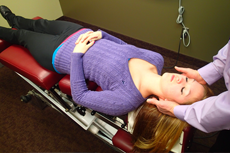
Spinal decompression therapy is a non-invasive treatment designed to reduce pressure within the spine. The therapy gently stretches the spine using controlled traction to create space between vertebrae.
This process may help:
- Reduce disc pressure
- Improve spinal mobility
- Promote circulation
- Reduce nerve compression
- Improve movement comfort
By decreasing stress on spinal discs and nerves, decompression therapy may help improve symptoms associated with lower body discomfort and walking limitations.
How Can Spinal Decompression Improve Walking Comfort?
Walking discomfort is often linked to restricted movement and nerve irritation. When spinal pressure affects nerves supplying the lower body, even normal movement can become uncomfortable.
Spinal decompression therapy may help improve walking comfort by:
- Reducing pressure on irritated nerves
- Improving spinal flexibility
- Supporting healthier disc function
- Decreasing lower back stiffness
- Improving posture and balance
As spinal mobility improves, the body may move more efficiently with less compensation and strain on surrounding joints.
Some patients report improved endurance and reduced discomfort during walking after reducing spinal compression.
Why Can Back Problems Affect the Knees and Ankles?
The body functions as a connected movement system. When spinal mechanics change, stress distribution throughout the lower body often changes as well.
For example:
- Lower back stiffness may alter walking posture
- Nerve irritation may affect leg stability
- Limited hip mobility may increase knee strain
- Compensation patterns may overload the ankles or feet
This is why individuals searching for knee pain relief or ankle pain therapy sometimes discover that spinal dysfunction contributes to their symptoms.
Addressing the spine may help reduce abnormal stress patterns throughout the lower body.
What Are Signs That Spinal Compression May Affect Walking?
Several symptoms may indicate that spinal pressure is influencing movement and walking comfort.
Common signs include:
- Leg pain during walking
- Heaviness in the legs
- Tingling or numbness
- Lower back tightness
- Pain that improves when sitting
- Reduced walking endurance
- Stiffness in the knees or ankles
- Difficulty standing upright for long periods
These symptoms may worsen gradually if spinal stress continues over time.
Can Spinal Decompression Help With Mobility?
Mobility depends on healthy joint movement, muscle coordination, and nerve function. When spinal discs and joints become compressed, movement often becomes restricted.
Spinal decompression therapy may support mobility by:
- Improving flexibility
- Reducing stiffness
- Supporting spinal alignment
- Encouraging healthier movement patterns
- Reducing muscular guarding
Combined with corrective exercises and posture-focused care, decompression therapy may help support long-term mobility improvements.
Why Early Treatment Matters
Ignoring walking discomfort may allow compensation patterns and spinal stress to worsen over time. Chronic nerve irritation and altered movement mechanics can gradually affect joint health throughout the lower body.
Early evaluation and conservative care may help reduce progression before symptoms significantly impact mobility and daily activities.
Learn More About Non-Invasive Spinal Care Options
Walking discomfort is not always caused solely by the knees or ankles. In some cases, spinal pressure and nerve irritation may contribute to lower body symptoms and reduced mobility. For individuals researching professional spinal decompression therapy, Elwart Family Chiropractic provides information about spinal health, decompression therapy, and non-invasive approaches that may help improve movement and reduce discomfort. Their team works with patients throughout Macomb Township, MI, who are looking for ways to improve mobility, posture, and overall spinal function.